
Ruler Set Orders: Identify Every Included Tool
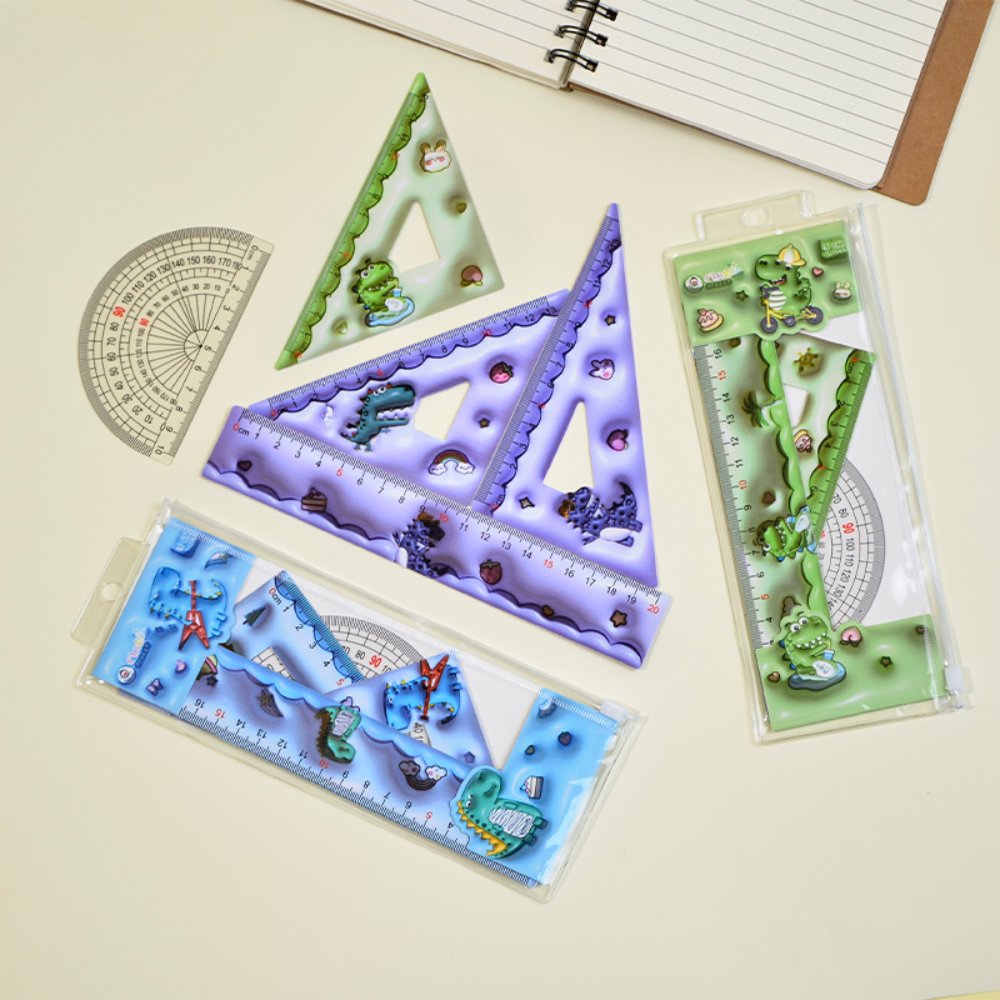
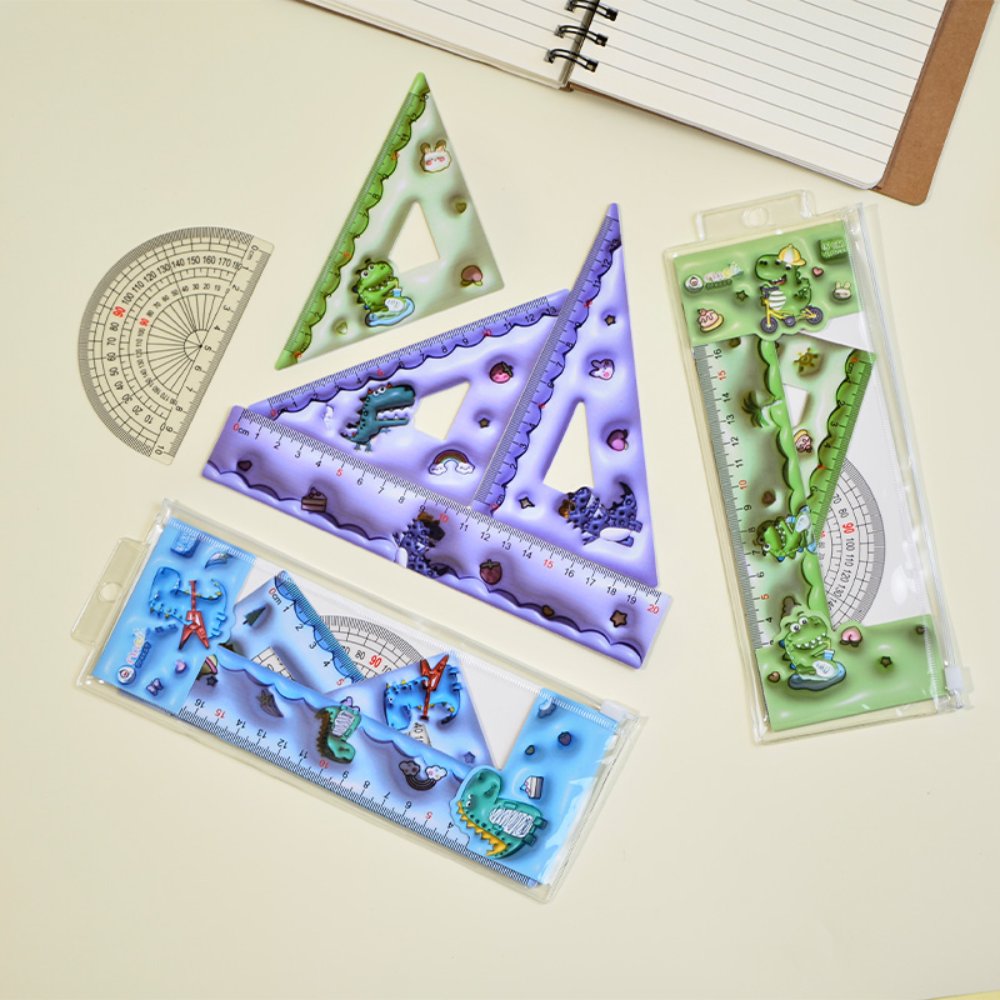
Specify a ruler set by naming every included tool and its reference image, then define the complete set as the quotation unit. Keep the sleeve and other packaging on separate lines. Review the actual sample against that schedule; a styled photograph can contain loose tools, several colourways and props that are not one saleable set.
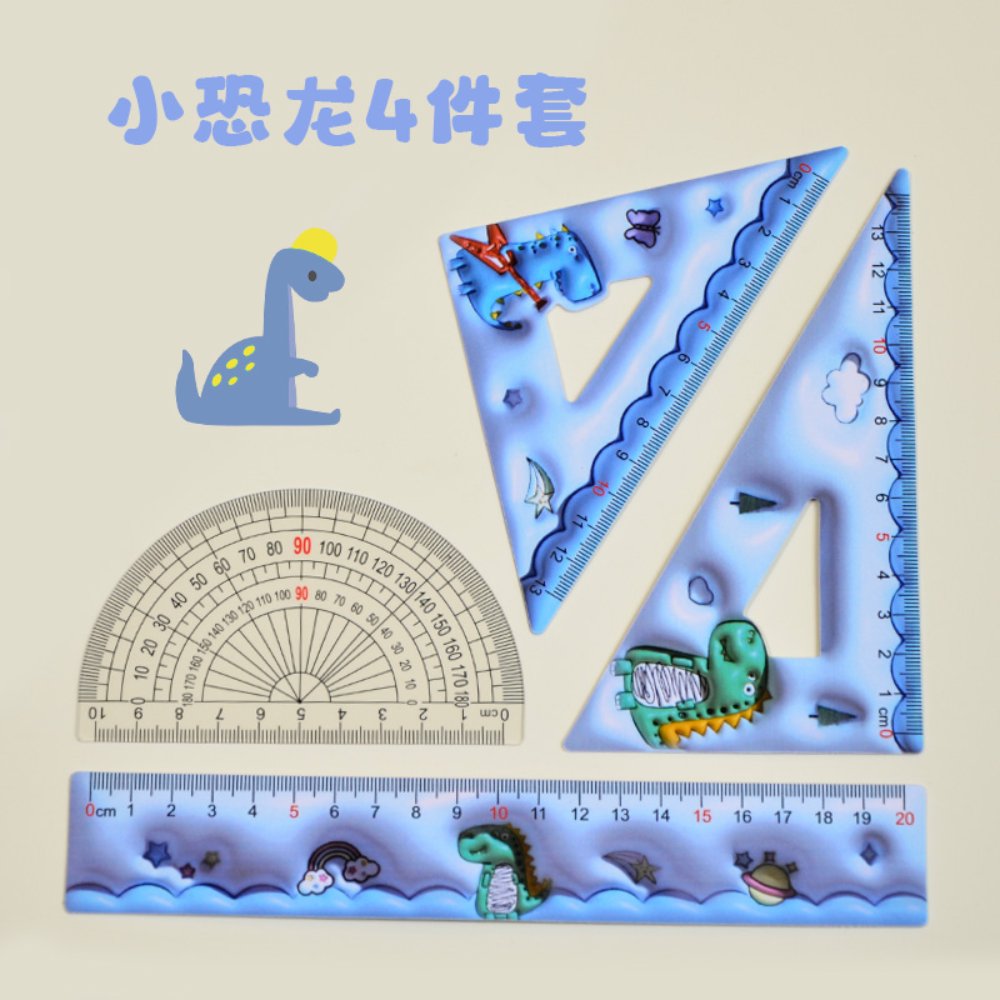
A stationery buyer needs to know what will arrive inside each ruler set before comparing quotations. Qihuan Stationery shows a straight ruler, two triangular tools and a protractor in its Soft Ruler Set catalogue. Turning that view into an explicit contents schedule prevents ambiguity about tools, decorated versions and the sleeve.
Build the tool schedule from the selected reference
Start with the Soft Ruler Set product page and identify the specific decorated version being requested. Name the straight ruler, each of the two set squares and the protractor separately. Give the triangular tools separate identifiers instead of treating them as one repeated piece.
For every line, request the supplier reference and the relevant dimensions or marked scale description. A catalogue view can help distinguish outlines, but perspective and printed decoration do not establish measured accuracy. Keep any required accuracy review outside the basic contents count.
- One identifier for each tool type.
- Selected decoration and colour reference.
- Sleeve inclusion stated independently.
- Complete-set quotation unit and explicit exceptions.
Separate a complete set from a styled group
The first selected photograph contains loose tools as well as sleeved examples in several colours. It is therefore a comparison scene rather than a reliable bill of contents for one pack. Tell the supplier which colour and tool combination should represent one commercial set.
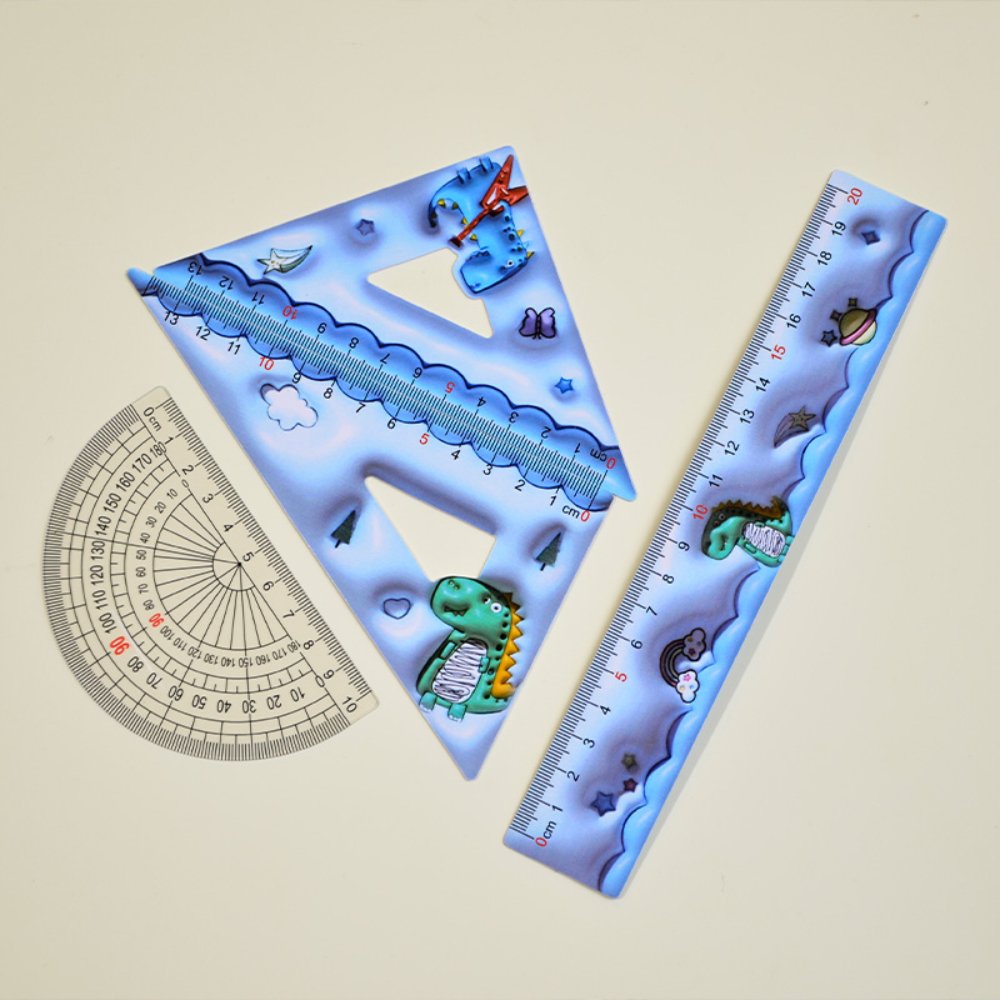
The other selected views show the decorated tools arranged without a sleeve. They help identify the four tool types, but do not prove that packaging is excluded from the actual offer. Ask the supplier to reconcile its proposed contents with the purchasing schedule.
| Schedule line | What to identify | Separate approval |
|---|---|---|
| Straight ruler | Selected version and marked scale description | Any accuracy requirement |
| Two set squares | Each outline and supplier reference | Artwork and dimensions |
| Protractor | Selected face and scale presentation | Measurement evidence |
| Sleeve | Included or excluded, proposed pack view | Retail presentation |
Give the sleeve its own decision line
Record whether the requested supply includes a sleeve and whether that sleeve is the immediate retail presentation or only a protective component. Ask for an actual closed-pack view and an opened contents view using the same identified sample. The two views should refer to the same proposed set.
A notebook or other item used to style a photograph should not enter the order by implication. Add an accessory only when the purchasing specification names it and the supplier acknowledges it. This matters when comparing a loose tool quotation with an apparently similar packaged set.
Approve decoration independently of the scale
The photographed tools carry coloured dinosaur-style decoration and visible scale markings. Identify the selected artwork and colour reference for each tool. If the intended order uses a different decoration, request the corresponding proof rather than assuming all pictured versions are interchangeable.
Keep printed artwork approval separate from any scale or measurement requirement. A bright, readable catalogue image is not a calibration record. Ask how the supplier will identify the approved version and what evidence it proposes for any separately agreed measurement requirement.
Reconcile the sample before accepting the offer
Lay out the actual sample using the same tool identifiers as the contents schedule. Record whether each listed item and the proposed sleeve are present. Use an exceptions column for a missing tool, a changed colour or a different packaging proposal rather than adjusting the original request silently.
After clarification, ensure the quotation names a complete set containing the accepted members. Request order-specific commercial terms directly from the supplier. Neither the photographs nor this contents method establish a particular MOQ, delivery date, material grade or student safety certification.
Frequently Asked Questions
Should both triangular tools have separate identifiers?
Yes. Naming each one makes the supplier response and sample contents easier to reconcile without treating different outlines as duplicates.
Is a sleeve included because it appears in one image?
Ask the supplier. State sleeve inclusion as its own purchasing field and request a view of the actual proposed complete pack.
Does a visible scale establish measurement accuracy?
No. A photograph is an identification reference. Any required accuracy needs a separate agreed evidence and sample review scope.
Can several pictured colours be treated as one assortment?
Only when the order defines that assortment and the supplier acknowledges its contents. Otherwise identify the selected version explicitly.
Compare the stationery range and send your tool schedule through Contact. Visit the blog for related sourcing topics.